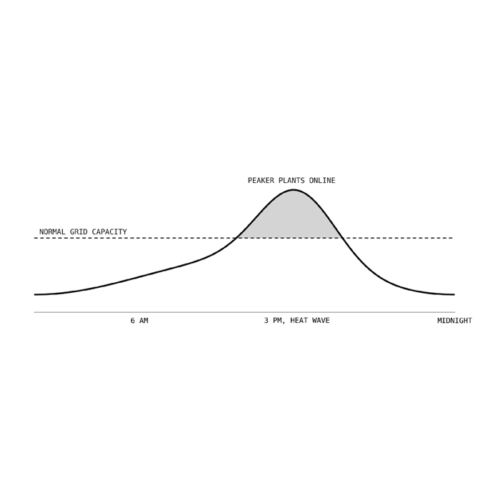
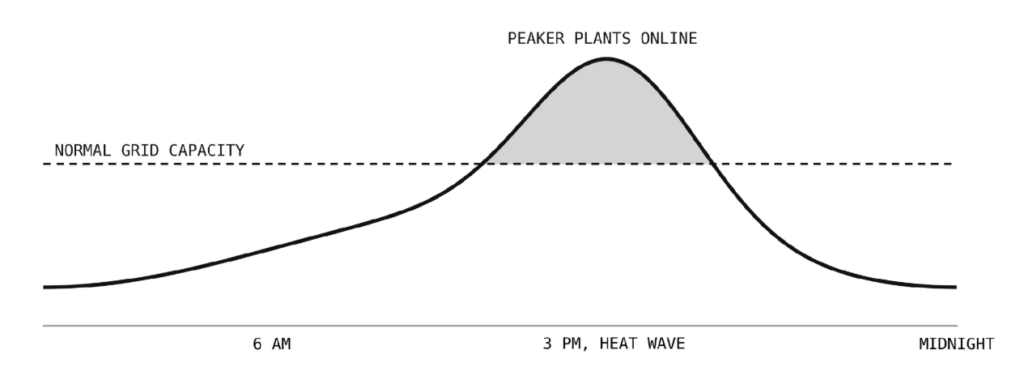
A peaker plant is a backup fossil-fuel power facility that activates only when electricity demand increases, typically during the hottest days of summer. New York City has sixteen of these plants on standby, mainly located in communities of color and low-incomes, with two of the most active ones situated directly across the water from Northern Manhattan. Utility Dive reported that New York City ratepayers paid $4.5 billion in capacity payments over the last decade just to keep these peaker plants running. That means every ratepayer in the city is paying to keep them idle, whether or not they are used.
What / How / Why
Public Health
The neighborhoods closest to a peaker plant bear the greatest pollution burden. Children with asthma near the Harlem River Yards and Hell Gate plants are about three times more likely to end up in the emergency room than asthmatic children elsewhere in the city, because peaker plants release fine particulate matter and nitrogen oxides that inflame airways and worsen existing respiratory and cardiac disease. More than a million New Yorkers live within three miles of a dozen of these units. And nearly a third of the state’s peaker plants sit in neighborhoods New York itself designates as Environmental Justice communities, meaning residents there are already carrying more than their fair share of the state’s health and environmental burdens before a single peaker plant is even added.
Your Utility Bill
The same ratepayers who are forced to experience this pollution are also paying to keep it running. To emphasize, over the last decade, New York City ratepayers spent an estimated $4.5 billion in “capacity payments,” which are fees paid simply to keep peaker plants available, whether or not they ever fire up. That bill lands hardest on households that can least afford it: more than 600,000 families in New York City already spend roughly 6 percent of their annual income on energy costs.
Close to Home
Two of the city’s most active peaker plants sit across the water from Northern Manhattan. The New York Power Authority’s Harlem River Yards plant, at East 132nd Street in the Bronx, and its Hell Gate plant, on Randall’s Island, are among the most frequently used peakers in the city. Both sit within a few miles of Inwood, Washington Heights, Harlem, and East Harlem, on opposite banks of the Harlem and East Rivers.
Sources
PEAK Coalition and New York Lawyers for the Public Interest, ratepayer capacity payment analysis; PSE Healthy Energy, peaker plant and Environmental Justice mapping; New York State Senate Bill S7923A; Utility Dive; Grist; Mott Haven Herald; Urban Omnibus; Kleinman Center for Energy Policy. Figures reflect the most recent published analyses available at time of writing; confirm against current PEAK Coalition and NYPA reporting before reuse in formal filings.