
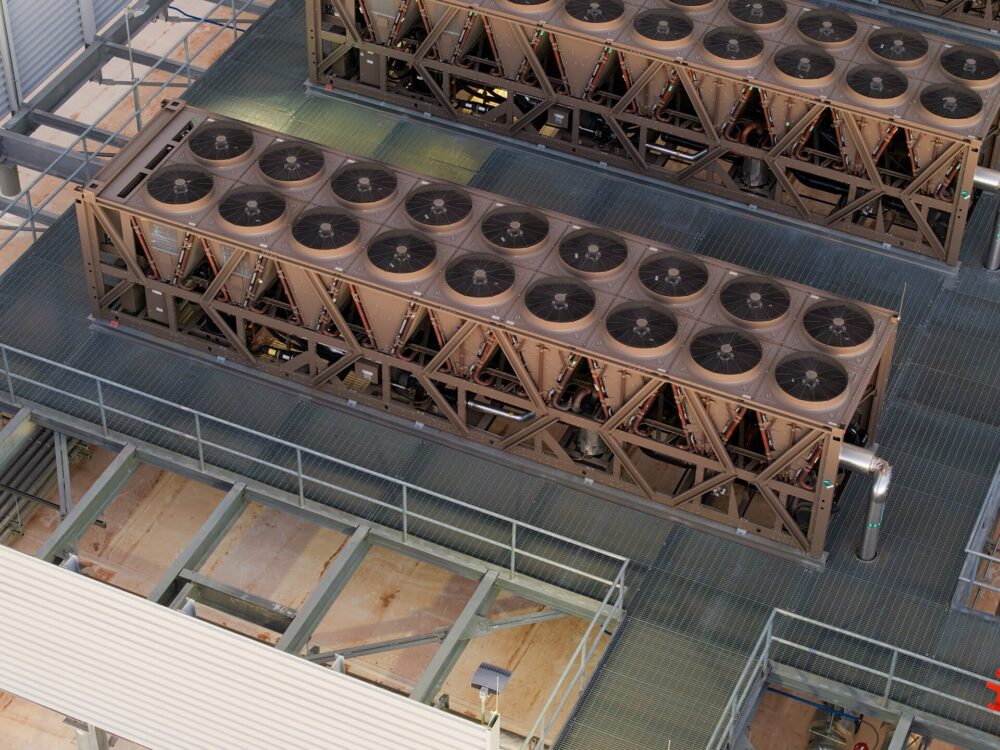
A New Chapter of Environmental Injustice
There are an estimated 4,000 data centers in the U.S. Highest amounts are in Texas, California, and “Data Center Alley” in northern Virginia. These energy- and resource-intensive, polluting facilities contribute to environmental, health, and economic burdens for communities of color and low-income. These communities are often already dealing with decades of health harms from existing toxic polluting sources, such as power plants and highways, as well as general underinvestment and lack of resources.
“All communities deserve to have a say in what is being built in their backyards, especially for environmental justice communities facing a legacy of dangerous facilities polluting their neighborhoods. This is even more important now as harmful, undemocratic practices are being employed in the build-out of data center projects, such as using non-disclosure agreements that keep communities in the dark.” – Yosef Robele, Federal Policy Manager, WE ACT for Environmental Justice
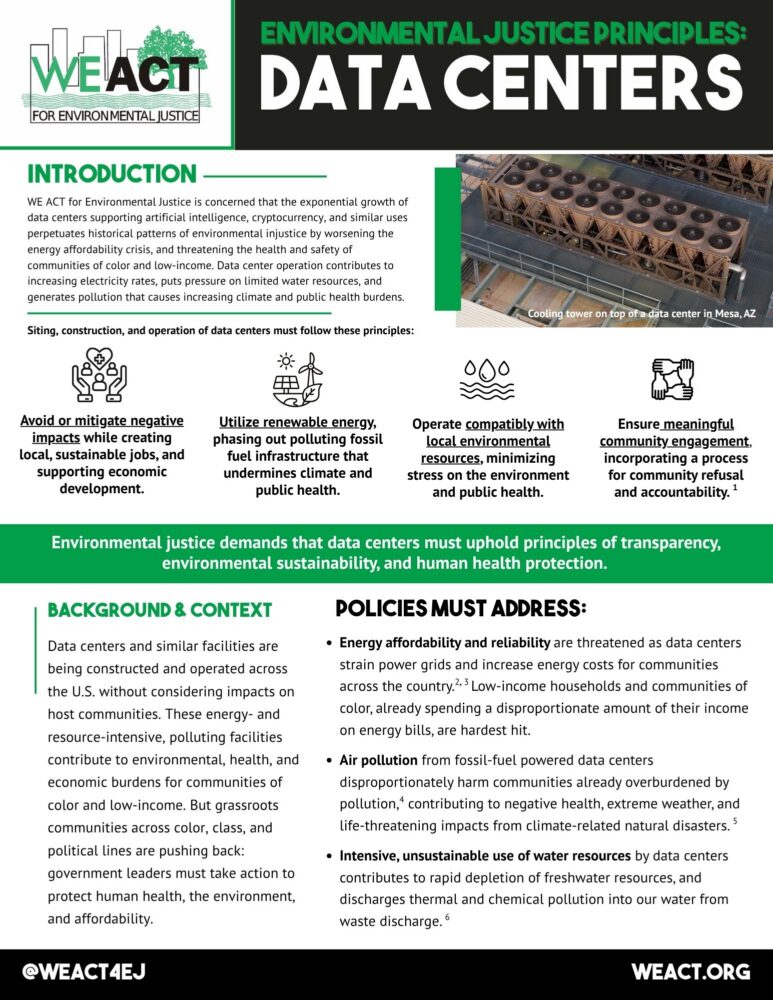
WE ACT's Data Center Environmental Justice Principles
WE ACT developed key principles to use as a benchmark in data center policy. Environmental justice demands that data centers must uphold principles of transparency, environmental sustainability, and human health protection. Construction and operation of data centers must incorporate comprehensive democratic processes that center equity, transparency, and environmental protection for impacted communities.
Siting, construction, and operation of data centers must follow these principles:
- Avoid or mitigate negative impacts while creating local, sustainable jobs, and supporting economic development.
- Utilize renewable energy, phasing out polluting fossil fuel infrastructure that undermines climate and public health.
- Operate compatibly with local environmental resources, minimizing stress on the environment and public health.
- Ensure meaningful community engagement, incorporating a process for community refusal and accountability.
DATA CENTER IMPACTS
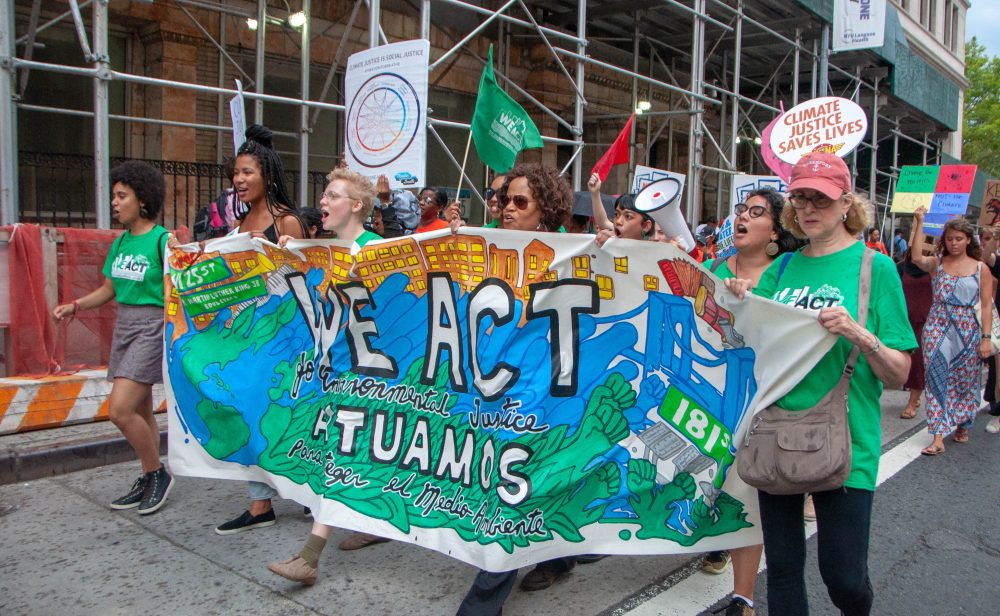
Take Action
Communities & Decision-Makers Are Pushing Back
- As of September 2026, at least 16 states have proposed moratoriums on data center construction: Delaware, Georgia, Maine, Maryland, Michigan, Minnesota, New Hampshire, New Jersey, New York, Oklahoma, Pennsylvania, South Carolina, South Dakota, Vermont, Virginia, Wisconsin.
- Recent report found over 300 data center opposition groups with over 400,000 members – 156 billion investments delayed or blocked in 2025 alone