In Northern Manhattan, poor air quality remains a persistent challenge rooted in decades of systemic inequity. While overall air quality in New York City has improved, low-income communities and communities of color continue to bear a disproportionate share of pollution and its health consequences. Northern Manhattan, for example, has some of the highest asthma rates in the country. This reflects broader research showing that people of color are exposed to more pollution, across all different types of pollution sources, which consistently results in greater adverse health outcomes.
Compounding these injustices, our communities have long been denied access to critical information about local pollution. Given the high cost equipment and technical expertise needed to monitor air quality, the closest monitors that produce publicly available data are located in Queens, miles away from the polluting facilities and heavy traffic corridors that directly impact Northern Manhattan. This lack of localized data is a clear example of epistemic injustice, where those most affected are systematically excluded from the knowledge and tools needed to understand and protect their own health.
LIVE: WE ACT’S COMMUNITY AIR MONITORING PROJECT
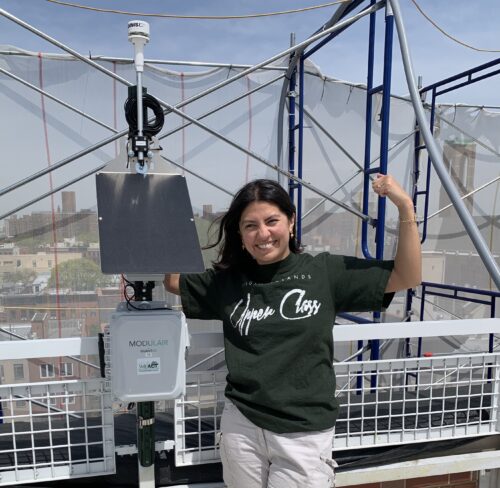
WE ACT’s Community Air Monitoring Project (CAMP) is our response to the environmental and epistemic injustices that have long denied our communities access to vital information about local pollution. CAMP is a community-driven initiative to democratize air quality data—ensuring that residents have the information, resources, and power to advocate for healthier environments.
In April 2025, we installed 18 high-quality air monitors on schools across Northern Manhattan. These QuantAQ sensors collect real-time data on seven EPA criteria pollutants, including particulate matter (PM₁, PM₂.₅, and PM₁₀) and gas-phase pollutants like carbon monoxide (CO), nitrogen oxides (NO, NO₂), and ozone (O₃).
Click here (or zoom in via the map below) to view real-time air quality data from WE ACT’s CAMP monitors across Northern Manhattan. You can also sign-up for text alerts from JustAir about air quality in your neighborhood.
COMMUNITY AIR MONITORING PROJECT
We first established a network of low-cost air monitors in October 2023, empowering WE ACT members to become community scientists by hosting monitors and conducting preliminary analyses of their own data. Over two years of collected data were then analyzed by a team of Capstone students from Columbia University’s Mailman School of Public Health.
A group of Capstone students at Columbia Mailman School of Public Health analyzed the over two years of data. You can explore our findings, including early insights into the potential impact of congestion pricing on air quality in Uptown communities here!