For Black History Month, and year round, we must highlight the people who are moving environmental justice forward – past and present. As we face the greatest rollbacks to environmental justice and public health in our time, we must remember that each of us contributes to the long arc bending towards justice. By highlighting the people who have been making it happen and are leading this work today, we are reminded that we the people – each of us – hold the power to create the world we need.
To highlight the everyday people creating big change across the U.S., we asked the WE ACT staff and the Environmental Justice Leadership Forum – a group of over 40 organizations across 22 states – who their Black Environmental Justice Heroes are. Though this is just a snapshot of the people who move environmental justice forward, they represent so many different ways to plug into the effort to create healthy, safe communities for all.
MARQUITA BRADSHAW
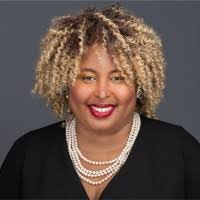
“Sowing Justice was instrumental in our success as mentors with a nonprofit compliance, Environmental Justice training, and partners in Memphis who we connect to create a major impact.”
Marquita carries forward the legacy of her mother the late, great Doris Deberry Bradshaw through their organization Sowing Justice, building on the work of environmental justice groups informing their community of the toxic exposure from a military superfund site. Bradshaw also ran for U.S. Senate in 2020, gaining national attention for winning the primary against the establishment candidate, and was the first African American woman to secure a statewide nomination using the traditional organizing model.
Today, Sowing Justice utilizes Environmental Justice principles to increase civic engagement beyond voting with organizing tools and resources for healthy and safe communities. Learn more at sowingjustice.org.
Marquita Bradshaw was nominated by Recycle, Reinvest of the EJLF.
FRANCIA MARQUEZ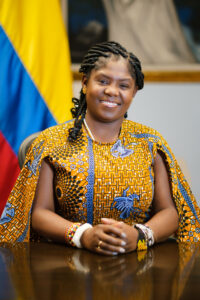
“Francia Marquez is the first Black vice president of Colombia. She began to fight for environmental justice when she was just 13 years old, and has been a fighter for environmental justice ever since. As a teenager, she organized against the diversion of a river and has fought against illegal mining as an adult. As Vice President of Colombia, she has advocated internationally for both climate reparations from the Global North to the Global South and reparations for chattel slavery.”
Francia Marquez was nominated by Jazz Hooks, Workforce Development Coordinator at WE ACT.
DERRICK EVANS
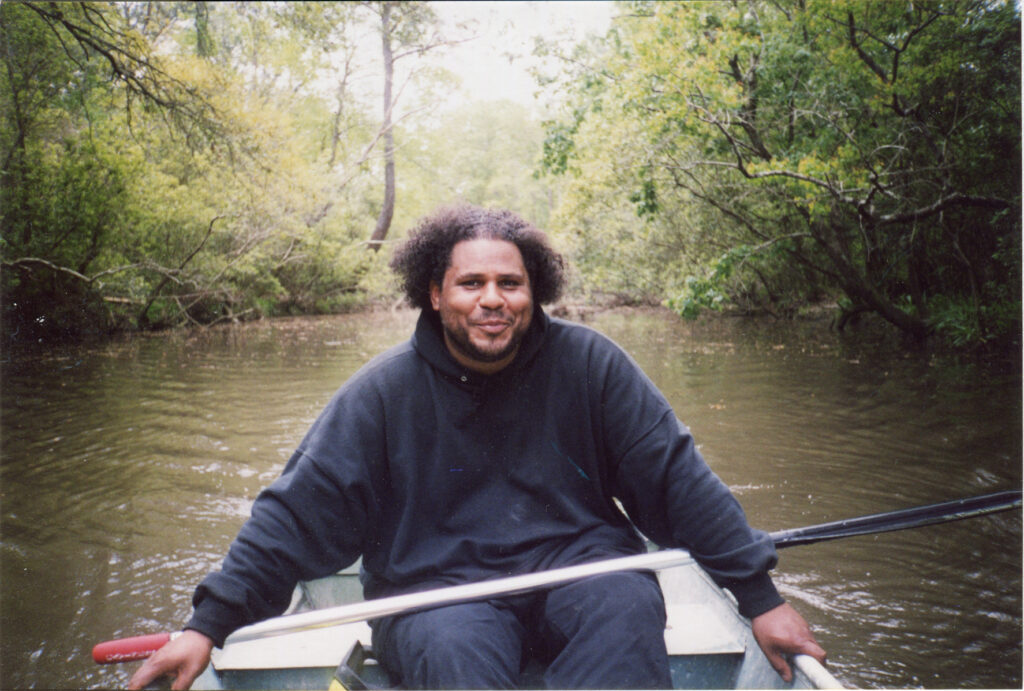
“I met Derrick after Hurricane Katrina in Gulfport, Mississippi. I was working with the late Rose Johnson, Chapter Director in Mississippi of the Sierra Club, when I was at the national Sierra Club. Derrick is a deep authentic soul, rooted in his community. He went to Boston for college & grad school, taught in the Boston school system. He created opportunities in Roxbury, MA for young people to invest in real estate so that their neighborhood could fight against gentrification. He went back to Turkey Creek after Katrina and has been culturally/historically and environmentally restoring his hometown.”
Derrick Evans, was a Boston teacher who moves home to coastal Mississippi when the graves of his ancestors are bulldozed to make way for the sprawling city of Gulfport. His story was featured in the documentary film ‘Come Hell or High Water: The Battle for Turkey Creek.’
Derrick Evans was nominated by Leslie Fields, Chief Federal Officer at WE ACT
ASHLEY CLEVELAND

“Ashley Cleveland is a powerful Black leader advancing inclusive environmental justice through community engagement, outdoor access, and equitable city planning. She has served as a community leader in Salt Lake City where she worked in city government on outreach programs that connect residents with decision-making processes and support equitable urban development.
Ashley is a dedicated alumni of Outdoor Afro, a national nonprofit that creates spaces for Black people and other people of color to gather, experience and build community in the outdoors — especially in regions where access to nature has historically been limited. Through this role, she organized regular outdoor events and helped change how outdoor engagement is envisioned and experienced locally.
In her professional work, she has bridged environmental, civic and planning sectors by working alongside multiple environmental organizations and community groups, helping cities design more equitable public spaces and stronger relationships between residents and local government. Today, she continues that impact in her role as a senior program advisor focused on civic engagement, teaching cities nationwide how to better engage with communities.”
Ashley Cleveland was nominated by Meisei Gonzalez Climate Justice and Clean Air Advocate at GreenLatinos.
FRANQUE MICHELE BAINS
 “Franque Michele Bains is a powerful Black leader advancing environmental justice through community-centered organizing and climate advocacy in Utah. As the Utah Chapter Director of the Sierra Club, she works to protect public lands, advance climate action, and build an inclusive movement that centers community voice. Franque has also helped organize grassroots efforts like the People’s Energy Movement of Utah, connecting environmental issues with equity, energy justice, and civic engagement. Her leadership was recognized as a 2024 Living Color Award honoree, highlighting her impact in advancing equity and justice across Utah’s environmental landscape.
I worked with Franque through a professional lens, particularly through our collaboration on Stay Salty: Lake Facing Stories, a multimedia storytelling project in Utah where she serves as a board member of Of Salt & Sand. Through this work, I’ve had the opportunity to learn from her thoughtful, values-driven leadership and her ability to ground environmental justice in culture, storytelling, and community. Franque brings clarity, care, and purpose to every space she’s in, and working alongside her has deepened my understanding of how strong leadership can shape more inclusive and impactful EJ narratives.”
Franque Michele Bains was nominated by Meisei Gonzalez Climate Justice and Clean Air Advocate at GreenLatinos
KIM GADDY
“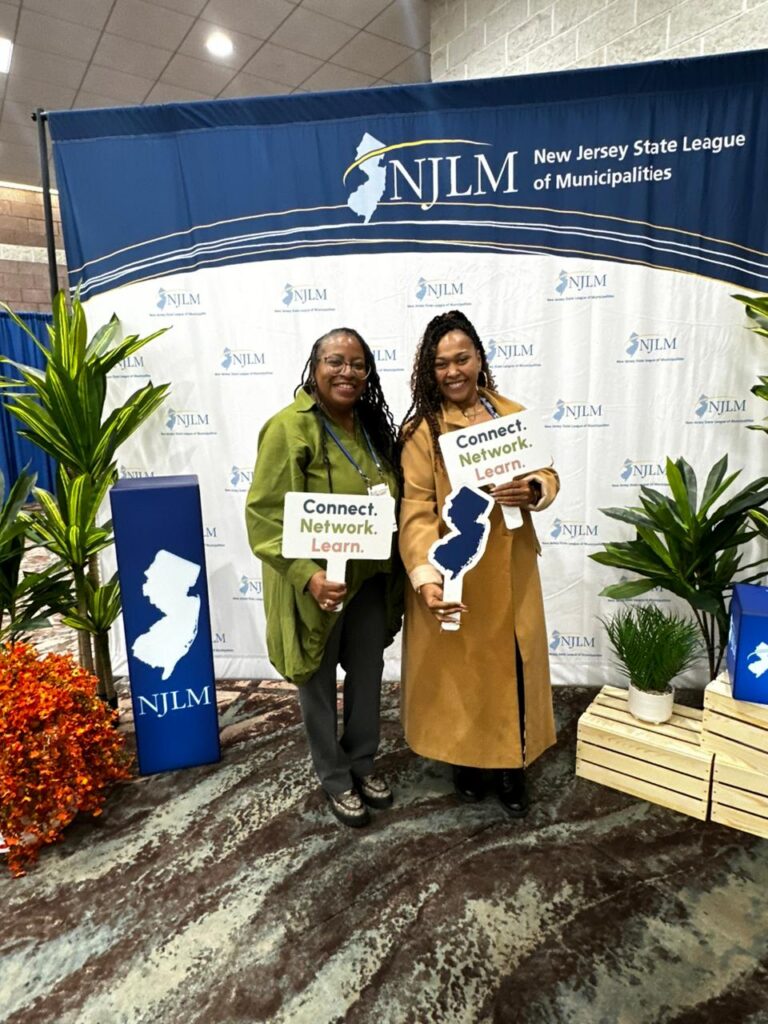 Kim Gaddy is a cornerstone of modern environmental justice leadership—grounded in community, unapologetically people-centered, and relentlessly focused on systemic change. As the Founder and Executive Director of the South Ward Environmental Alliance (SWEA) in Newark, New Jersey, Kim has spent decades organizing alongside residents who live at the frontlines of pollution, climate risk, and disinvestment. Her work bridges grassroots power-building with policy advocacy, ensuring that those most impacted by environmental harm are not only heard, but are shaping the solutions. From air quality monitoring and port-related pollution advocacy to green workforce development and youth leadership pipelines, Kim’s leadership reflects a deep understanding that environmental justice is inseparable from racial justice, economic dignity, and public health.
In moments of political rollback and shrinking protections, Kim reminds us that the power of environmental justice has always lived with the people. Her legacy—past, present, and still unfolding—is a testament to steady courage, collective action, and the belief that liberation is built block by block. As we honor Black History Month and look toward the future, Kim Gaddy stands as living proof that when communities organize, justice moves from aspiration to action.
Kim Gaddy has been my mentor for over twenty years, and I can say without hesitation that she has always been ahead of her time. I was part of her very first Environmental Justice Leadership Training Program—then called the Urban Environmental Institute (UBI)—where she trained young people to understand environmental justice not as a concept, but as a responsibility. Even then, Kim was clear: if we wanted real change, we had to invest in the next generation. She believed deeply that leadership is built, not discovered, and that young people needed tools, language, and confidence to see themselves as agents of change. That vision wasn’t trendy then—but it was transformative. And it shaped the way many of us saw ourselves and our futures. One of Kim’s most powerful teachings has stayed with me ever since: every job can be a green job.
Environmental justice doesn’t have to look one way, sound one way, or come from one lane. Kim helped me understand that my interests in media, marketing, systems, and storytelling were not separate from environmental justice—they were essential to it. Because of her mentorship, I’ve been able to build a production studio and a nonprofit focused on helping other nonprofits and social good organizations become stronger, clearer, and more effective in how they communicate and strategize. Kim has always allowed me space to grow, evolve, and lead in my own way—while keeping me close to the work and the people. Her legacy isn’t just the policies changed or organizations built; it’s the leaders she’s poured into, generation after generation. And that is how movements last.”
VERNICE MILLER-TRAVIS
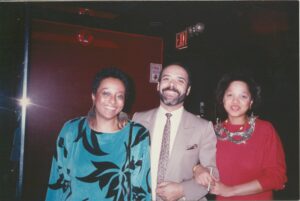
Vernice Miller-Travis is a pioneering force in the environmental justice movement whose historic contributions have helped lay the foundation for the fight we continue today. Vernice is a Co-Founder of WE ACT, and one of the main researchers from the foundational report ‘Toxic Wastes & Race.’ Today, Vernice is Executive Vice President at Metropolitan Group and continues to be one of the most innovative leaders of the environmental justice movement.
Vernice Miller-Travis’s groundbreaking work and legacy are a reminder that the movement has always been led by bold, visionary Black women who refused to let their communities be sacrificed. Her story is one of courage, power, and relentless advocacy.
Vernice Miller-Travis was nominated by Jaron Burke, Senior Program Manager and Lonnie Portis, Director of NY Policy and Legislative Affairs at WE ACT.
_______________
The individuals nominated here are the past and present of the work – everyone who is a part of the movement deserves their flowers! Excited to learn more about Black History and Environmental Justice? Explore and share our StoryMap here.