To Win the Next Chapter of Civil Rights Progress, We Must Center Health, Safety, & Access for All
By Leslie Fields, Chief Federal Officer, WE ACT for Environmental Justice
What does freedom mean to you? As Toni Morrison shared in Beloved, “Freeing yourself was one thing, claiming ownership of that freed self was another.”
As we celebrate Juneteenth in commemoration of the final enforcement of the Emancipation Proclamation in Texas aiming to end slavery in the U.S., we also must reckon with how far we’ve actually come, and how we define ourselves as a country. What does Juneteenth in 2026 mean in the same year of the 250th anniversary of “America, with liberty and justice for all,” while voting rights for millions of people of color are being taken away? How do we celebrate freedom in the wake of the Trump administration’s year of health and environmental protections rollbacks that will add even more pollution in communities of color, leading to decades of asthma, cancer, and death? We are living through a unique time. Pressure for change is building, and there is a rising hunger to create something that actually makes life better for all of us.
These attacks are fuel to reimagine our country and achieve “liberty and justice for all.” Environmental justice can lead the way.
Environmental justice may not be a term everyone knows, but it knows everyone. That’s because it addresses everything we need to live well in our environments, including making sure everyone has access to clean air, water, and land. It also directly addresses a legacy of discrimination in the U.S. that shapes current disparities. Environmental justice delivers accountability and solutions to tackle the overexposure of people of color and communities of low income to pollution, as well as related health harms and generations of underinvestment.

This year also marks the 35th anniversary of the Environmental Justice Principles, drafted and adopted at the groundbreaking First National People of Color Environmental Leadership Summit. These principles continue to be more relevant than ever in the fight for freedom. Among them are concepts like “public policy [should] be based on mutual respect and justice for all peoples, free from any form of discrimination or bias,” and “affirming the fundamental right to political, economic, cultural and environmental self-determination of all peoples.”
Now is the time to put environmental justice principles into action in order to accelerate a shared movement that uses our fights for justice as part of the same story.
To light that spark, we have to take a hard look at the dark reality of the present. Our rights are no longer being chipped away at, they’re being sledgehammered. Over the last year of Trump 2.0, we saw a major blow with the Supreme Court destroying Section Two of the Voting Rights Act of 1965. This section stopped the redistricting of maps that discriminate on the basis of race, color, or language minority status. The Voting Rights Act was enacted due to the years of blood and lives lost fighting against vicious racial Jim Crow segregation. We are seeing a betrayal of those who fought for those rights in pursuit of a fair and democratic system, and an erosion of the fundamental right of people to elect their own representatives.
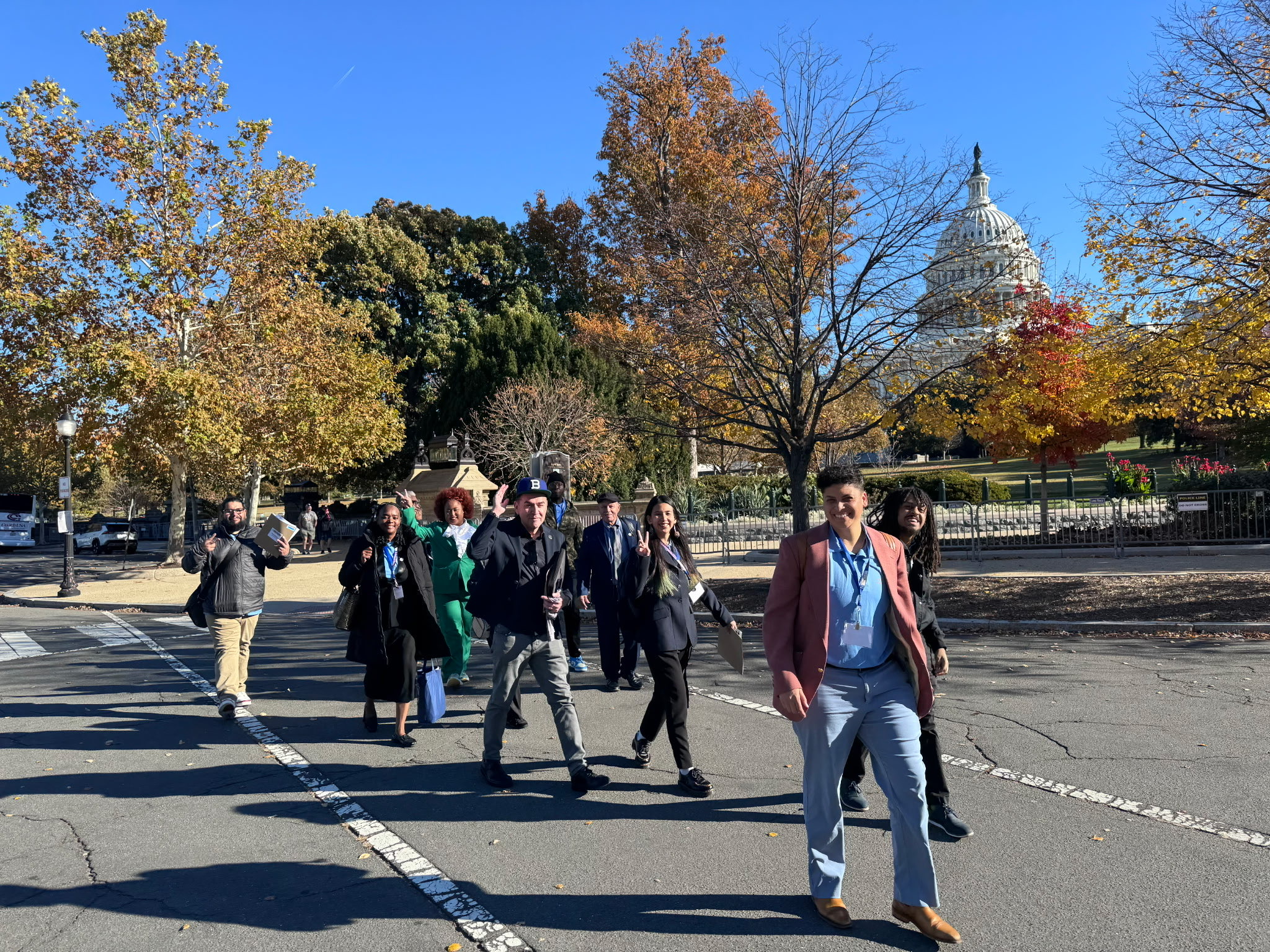
We are also seeing the most unprecedented rollbacks to health and environmental protections of the last 50 years. Communities of color and low-income will face the greatest consequences from the Trump administration’s wholesale destruction of environmental bedrock laws and regulations, including the U.S. Environmental Protection Agency’s (EPA) repeal of the Endangerment Finding, mass funding cuts, and the loss of scientific data and experts. The gutting of the Voting Rights Act harms the same communities. Communities in Louisiana suffering from environmental racism in “Cancer Alley” also struggle under white supremacist voting discrimination.
When communities cannot elect their representatives, they will not have equitable laws and policies to address and enforce against environmental pollution in their communities. These communities who are disproportionately burdened by pollution (due to discriminatory siting) will continue to suffer poor health, economic, educational, and social outcomes made worse by the climate crisis. According to Black Voters Matter, Republican legislatures in 10 Southern states could redraw maps to wipe out 191 state seats held by Black lawmakers in majority-minority districts. This advances the Trump administration’s ongoing denial of Black and Latinx communities’ constitutional right to participate in the democratic process.
Injustice does not act in isolation. We’ve also seen attacks on the rights of immigrant communities, free speech, and LGBTQIA+ rights. When these hammers come down, they have a ripple effect that spurs further injustice. With the Trump administration consistently tipping the scales in favor of polluting industries, self-interested billionaires, and prejudiced groups, even the leaders who claimed to want better are bowing down to Trump’s pressure. Governor Hochul’s hollowing out of New York State’s climate law is a proof point, taking the state from leading the nation forward to backsliding on affordable, clean energy.
The Trump administration and allied efforts to smash our democracy and upend health and environmental protections reveal something crucial: Our movements to defend our rights are being attacked because they are effective, and most importantly, they’re interconnected. Our power can be unleashed when we unify our efforts. Fair representation and clean‑air protections are deeply connected; when pollution harms our health, it also harms our ability to organize, vote, and be heard. Community organizing to protect our neighborhoods against the buildout of data centers is the same as efforts to stop climate pollution, because data centers drive more fossil fuel emissions that leads to losing our homes and lives to climate-driven disasters. Many of the challenges we face as a society and in our everyday life can be resolved through environmental justice; from making our energy bills more affordable and reducing exposure to indoor air pollution, to preventing toxic facilities from ending up in our backyards and safeguarding our right to vote.
Environmental justice is built on the idea that when we create policies that support and protect the most vulnerable, we all benefit.
As the Combahee River Collective expressed, “If Black women were free, it would mean that everyone else would have to be free since our freedom would necessitate the destruction of all the systems of oppression.” The work we do next must be focused on shared freedom, removing the separations between our efforts, and leaving no room for gaps that give any future administration and their interests a chance to rupture our progress.
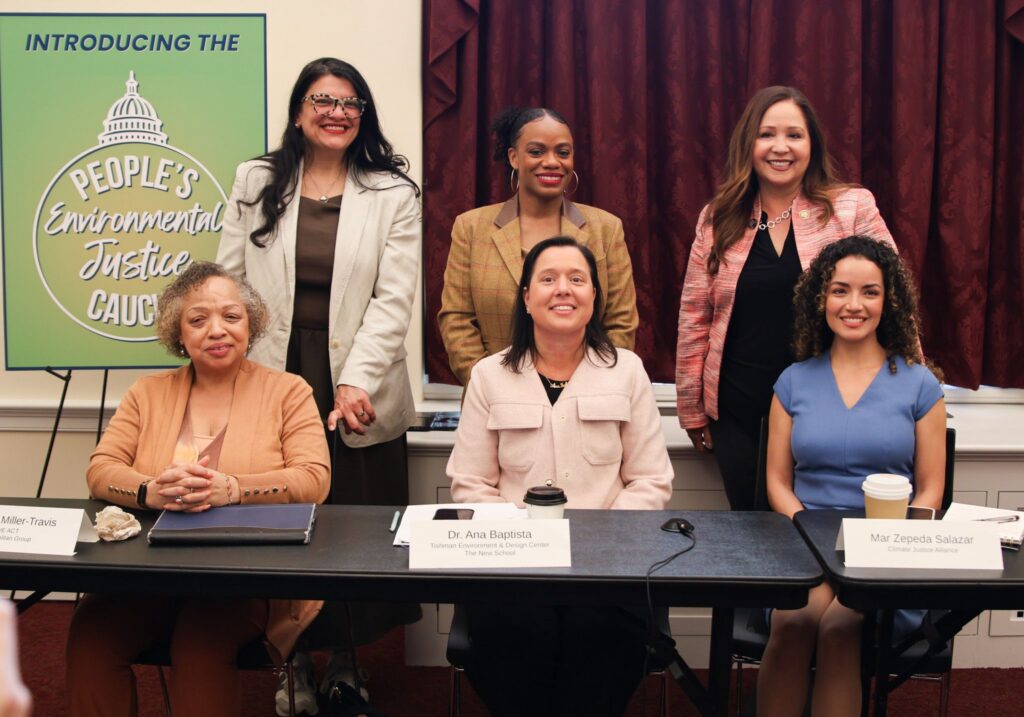
The vision for this combined movement for freedom is already here in so many ways. The Environmental Justice for All Act, co-led by the late Representatives Donald McEachin (D-Va.) and Raúl Grijalva (D-Ariz.), is a piece of legislation that was crafted through a deeply participatory, nation-wide, community-led process, and its design inherently combines civil rights and environmental justice. It ties efforts to expand Title VI of the Civil Rights Act of 1964 to prohibit federal activities from causing disparate impacts on the basis of race, color, or national origin with environmental justice requirements, cumulative impacts protections, and advisory groups to make sure that we all can live in health and safety. Moving this legislation forward in tandem with both the Senate and new House Environmental Justice Caucuses can help make sure that people – not polluters – are shaping policies that benefit everyone.
In parallel, we have to address the free-pass for polluters policy of the Trump administration, which is a deadly weight on the shoulders of communities of color and low-income. This is urgently needed, as almost half of people in the U.S. live in places with unhealthy air including 78 million people of color. We have to defend regulations and go even further to enact strong clean air and health protections while restoring staff and funds at the EPA. We must also fulfill the promise of Justice40 community‑investment programs — beginning with returning the unlawfully clawed‑back $29 billion in grants, so communities can improve health, create renewable‑energy jobs, and clean up legacy pollution in neighborhoods across red and blue states. And next, the future version of these investments must remove application barriers and more clearly define “benefits” so that local leaders can create lasting positive change with long-overdue funding.
At the state and federal level, we can demand transparency and community engagement in voting rights advocacy through Communities of Interest Districts (COIDs). The districts are “groups of individuals who are likely to have similar legislative concerns, and who might therefore benefit from cohesive representation in the legislature.” State legislative COIDs are recognized in 24 states, and Congressional COIDs in 13 states. This would help push back against political gerrymandering of voting districts that disenfranchises communities of color, by instead districting based on shared cultures, industries, public spaces, or issues like pollution, keeping neighborhoods together to elect representatives that align with their needs. Similarly, we have to pass legislation like the John R. Lewis Voting Rights Advancement Act, which would update and “revitalize the Voting Rights Act of 1965, strengthening legal protections against discriminatory voting policies and practices.”
Times like this are exactly when big shifts are born. From a country that was built through the exploitation of enslaved people and the violent colonization of Indigenous nations, environmental justice is what is needed to transform us into a more fair country; a country growing from the self-determination and ingenuity of diverse neighbors who are set up to succeed.
True freedom is only possible when every person across race, class, and identity is not only fairly represented, but can also embody a life of dignity, health, safety, and opportunity.
We have to own that collective and interconnected freedom, each of us in a real, active way. For ourselves, and for each other. Our forebearers, ancestors, and future generations are depending on us.